A bond with teeth
Wren's mercy triggers an ancient contract neither character understands. It grants protection and power, but it can also take away choice. Every advantage creates a debt the relationship must eventually face.
For readers who want fate challenged, not obeyed
The Covenant of Fate is not a soulmate guarantee. It is a divine hierarchy with one merciless law: the weaker kneels to the stronger. By day, the sealed assassin must obey Wren. When his power wakes, the command reverses.
The reader promise
“For readers who enjoy forced proximity and supernatural bonds, but want the story to question compulsion instead of calling it love.”
Why Fatebound fits
Wren's mercy triggers an ancient contract neither character understands. It grants protection and power, but it can also take away choice. Every advantage creates a debt the relationship must eventually face.
Soren is nearly powerless while sealed and catastrophically dangerous when unsealed. Control can turn in either direction, forcing both characters to confront what trust means when obedience is available.
The saga does not treat fate as proof of love. Its six-book arc asks whether two people first chained together will still choose each other when the chain can no longer command them.
This may be your next binge if you want
Choose another path if you need
Also shelved as
Readers describe this corner of the genre in a dozen different ways. If you arrived searching any of these, Fated Bond Fantasy Romance is the page you wanted.
Before you open Book One
Not in the usual soulmate sense. Wren and Soren are linked by a divine contract that compels the weaker to obey; their emotional relationship must develop separately.
Yes. Soren's seal changes which character holds greater power, so the magical hierarchy can reverse.
Yes. Compulsion and compromised consent are deliberate conflicts, with clear content notes and an arc toward love proven without magical control.
The complete saga begins here
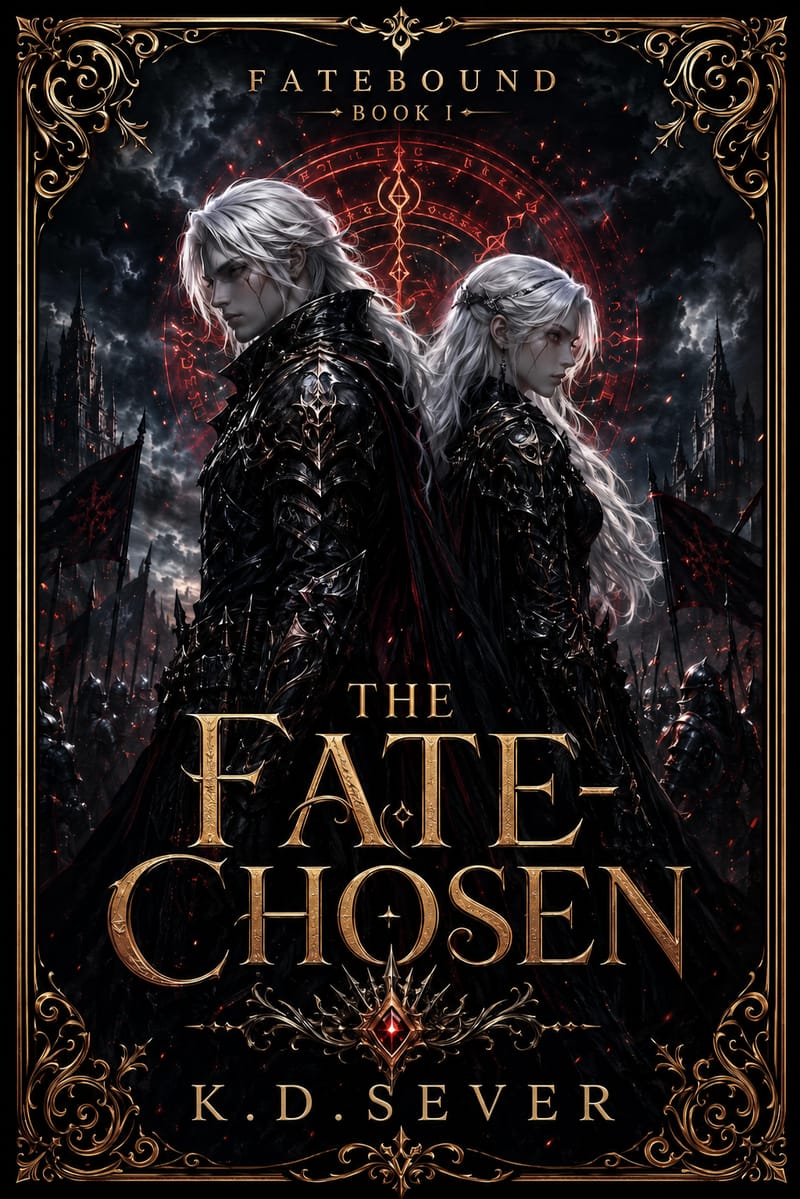
Wren Calder wants a knighthood. Instead, a god's covenant binds her to Soren—the sealed assassin known as the Last Knife—and makes the weaker obey the stronger.
Find The Fate-Chosen on Amazon